
Large Language Models (LLMs): Transforming Human–Machine Communication
Large Language Models (LLMs) represent a major breakthrough in artificial intelligence, enabling machines to understand and generate human-like text with remarkable accuracy. Built using advanced deep learning architectures, particularly transformer models, LLMs are trained on vast datasets that include books, articles, websites, and other textual sources. This extensive training allows them to capture language patterns, context, and meaning at a highly sophisticated level.
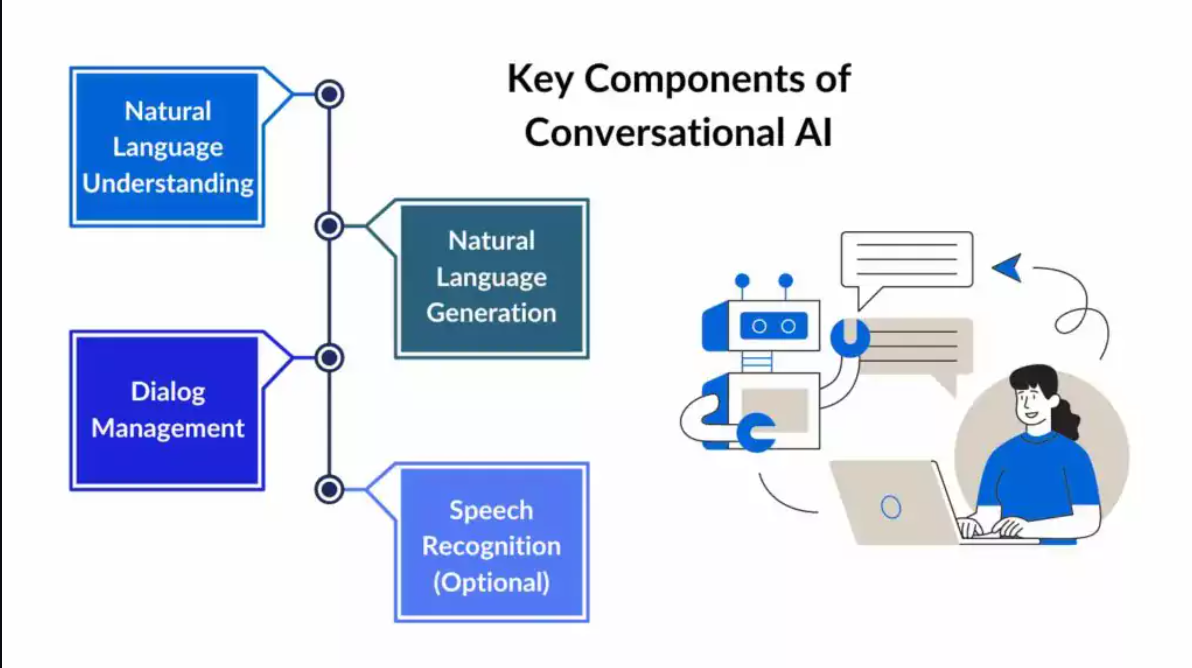
One of the defining capabilities of LLMs is their versatility. They can perform a wide range of tasks, including text generation, summarisation, translation, question answering, and conversational interaction. These capabilities have led to the widespread adoption of LLMs in applications such as chatbots, virtual assistants, content creation tools, and customer support systems.
LLMs also play a significant role in enhancing productivity across industries. In education, they assist in tutoring and content explanation. In healthcare, they support clinical documentation and research analysis. In business environments, they help automate communication, generate reports, and provide insights from large volumes of textual data.
Despite their advantages, LLMs present certain challenges. Issues related to accuracy, bias, and data privacy require careful attention. Since these models learn from existing data, they may sometimes generate incorrect or misleading information. Ensuring transparency, responsible use, and continuous monitoring is essential for maintaining trust in LLM-based systems.
Another important consideration is computational cost. Training and deploying large language models require significant computing resources, which can impact accessibility and sustainability. Ongoing research is focused on improving efficiency and reducing resource requirements.
As artificial intelligence continues to evolve, LLMs are expected to play a central role in shaping how humans interact with technology. By enabling more natural and intelligent communication, they are redefining digital experiences and expanding the possibilities of human–machine collaboration.
#LLM #LargeLanguageModels #ArtificialIntelligence #MachineLearning
#NLP #GenerativeAI #AIInnovation #DeepLearning #Chatbots #FutureOfAI
#TechTrends #DigitalTransformation
Author
Dr. Akhilesh Kumar
References
- OpenAI. Research on large language models and generative AI systems.
- Google Research. Transformer models and natural language processing advancements.
- Association for Computational Linguistics. Studies on language models and NLP research.
Comments (0)
No comments yet. Be the first to share your thoughts!
Leave a Comment