
Edge AI Orchestration: When Thousands of Devices Form a Distributed Brain
The evolution of artificial intelligence is moving beyond centralised cloud systems toward a new era of distributed intelligence. Edge AI orchestration is emerging as a transformative approach where thousands of connected devices collaborate, process information locally, and function collectively as a distributed brain. This shift is redefining how intelligent systems operate across industries such as healthcare, manufacturing, transportation, and smart cities.
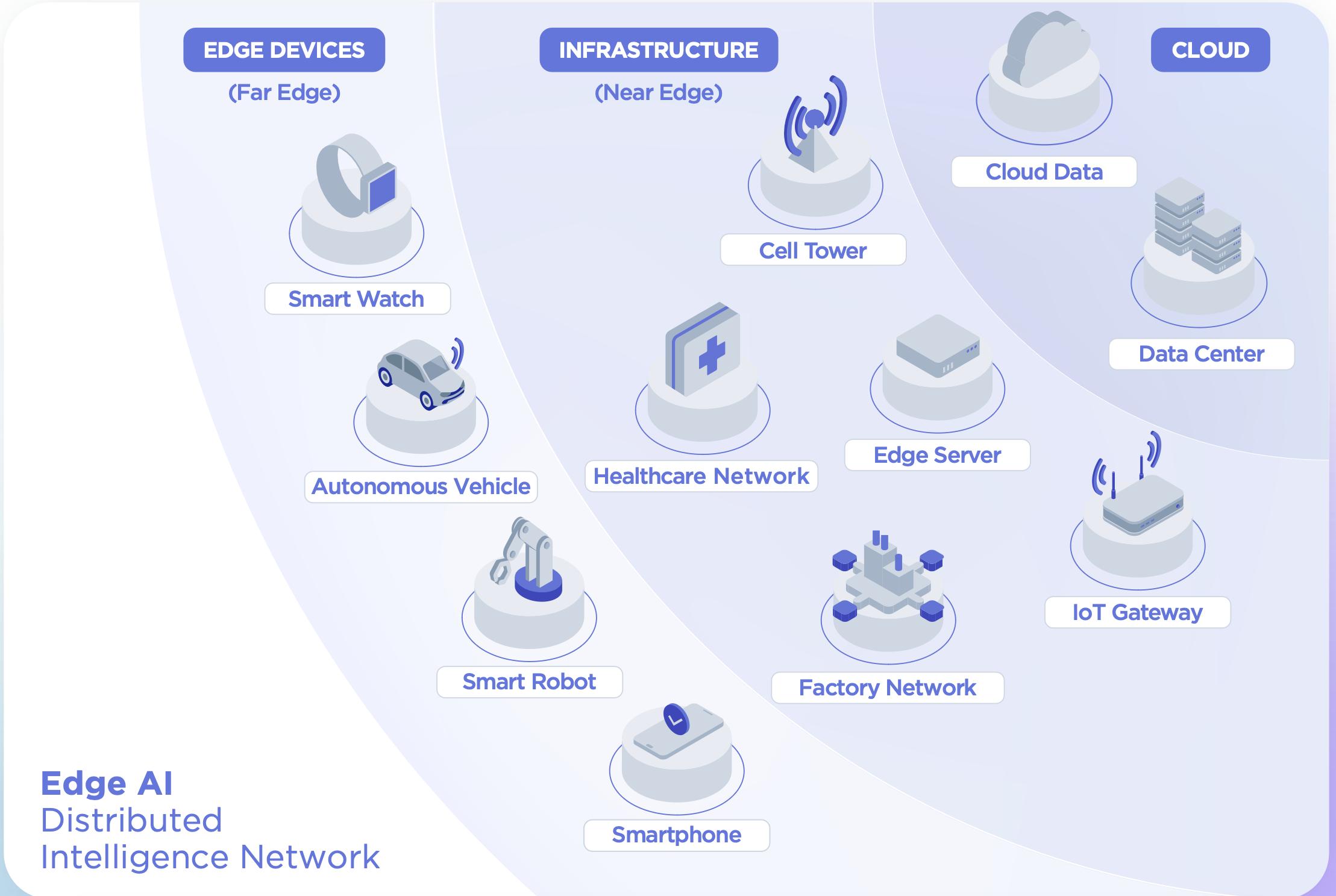
Traditional AI architectures rely heavily on centralised cloud computing, where data generated by devices is transmitted to remote servers for processing. While effective, this model introduces latency, bandwidth limitations, and privacy concerns. Edge AI addresses these challenges by enabling devices to process data locally at or near the source. Edge AI orchestration extends this concept further by coordinating multiple intelligent devices to work together dynamically.
In a distributed AI ecosystem, each device acts as a node capable of sensing, processing, and communicating information. These nodes collaborate through orchestration frameworks that manage workloads, synchronise decisions, and optimise resource usage. Instead of functioning independently, devices become part of a collective intelligence network capable of adaptive and real-time responses.
One of the key benefits of edge AI orchestration is low latency. Real-time applications such as autonomous vehicles, industrial automation, and healthcare monitoring require immediate decision-making that cannot depend solely on distant cloud servers. By processing information locally and sharing insights across connected nodes, edge systems can respond rapidly to changing conditions.
Scalability is another major advantage. As billions of IoT devices continue to emerge, centralised systems may struggle to handle the growing volume of data. Distributed AI reduces the burden on cloud infrastructure by decentralising computation. This enables more efficient and resilient operations, particularly in large-scale environments such as smart factories and urban infrastructure.
Edge AI orchestration also enhances reliability. If one node fails, other devices in the network can continue functioning, ensuring continuity of operations. This decentralised resilience is particularly valuable for mission-critical systems where downtime can have significant consequences.
Artificial intelligence models optimised for edge environments are central to this transformation. Lightweight machine learning models, federated learning techniques, and energy-efficient AI chips enable devices to perform advanced analytics without excessive power consumption. Organisations such as NVIDIA and Intel are actively developing technologies that support distributed AI ecosystems.
However, orchestrating thousands of intelligent devices also introduces challenges. Security is a major concern, as distributed systems expand the potential attack surface. Protecting communication channels, managing authentication, and ensuring secure data sharing are critical for maintaining trust and resilience.
Interoperability and standardisation are additional considerations. Devices from different manufacturers and platforms must communicate seamlessly for orchestration to function effectively. Developing unified frameworks and protocols will be essential for large-scale adoption.
In conclusion, edge AI orchestration represents a significant step toward decentralised intelligence. By enabling thousands of devices to function collectively as a distributed brain, organisations can achieve faster decision-making, improved scalability, and greater operational resilience. As AI and edge computing continue to converge, this distributed model is expected to become a foundational element of the next generation of intelligent infrastructure.
#EdgeAI #ArtificialIntelligence #DistributedAI #IoT #EdgeComputing
#SmartTechnology #AIOrchestration #DigitalTransformation #FutureTech
#MachineLearning #SmartCities #TechInnovation
Author
Dr. Akhilesh Kumar
References
- NVIDIA. Edge AI and Distributed Computing Technologies.
- Intel. AI Orchestration and Edge Computing Research.
- Institute of Electrical and Electronics Engineers. Studies on Distributed AI Systems and IoT Intelligence.
Comments (0)
No comments yet. Be the first to share your thoughts!
Leave a Comment