
Digital Twins for Critical Infrastructure: From Smart Factories to Smart Cities
As industries and cities become increasingly interconnected, the demand for intelligent infrastructure management is growing rapidly. Digital twin technology has emerged as a transformative solution, enabling organisations to create virtual replicas of physical systems for monitoring, analysis, and optimisation. From smart factories to smart cities, digital twins are redefining how critical infrastructure is designed, operated, and maintained.
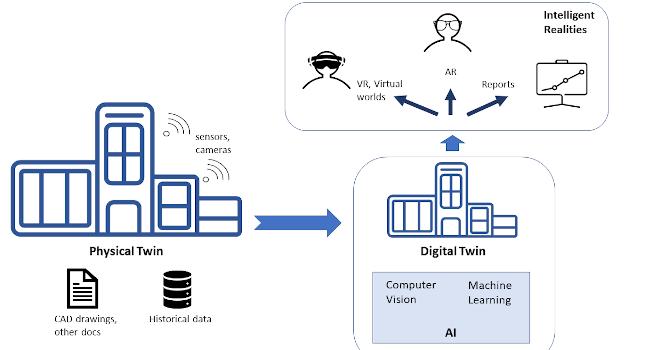
A digital twin is a dynamic virtual model that mirrors the behaviour and condition of a real-world asset or system. By integrating data from sensors, IoT devices, and operational systems, digital twins provide real-time insights into performance, efficiency, and potential risks. Unlike static simulations, digital twins continuously evolve based on live data, making them highly valuable for predictive and adaptive decision-making.
In manufacturing, digital twins are revolutionising smart factories. Industrial equipment, production lines, and supply chains can be monitored in real time to identify inefficiencies, predict failures, and optimise operations. Predictive maintenance is one of the most significant applications, allowing organisations to detect equipment issues before breakdowns occur. This reduces downtime, lowers maintenance costs, and improves productivity.
The impact of digital twins extends far beyond factories. In smart cities, digital twin technology enables urban planners and administrators to model and manage complex infrastructure systems, including transportation, energy grids, water distribution, and public services. By analysing real-time data, city authorities can improve traffic flow, optimise energy usage, and respond more effectively to emergencies.
Another major advantage of digital twins is scenario simulation. Organisations can test strategies, evaluate risks, and predict outcomes without affecting physical systems. For example, city planners can simulate disaster response strategies, while industrial operators can analyse the impact of production changes before implementation.
Artificial intelligence and machine learning further enhance digital twin capabilities. AI-driven analytics can identify hidden patterns, forecast future conditions, and automate responses. This combination of AI and digital twins creates intelligent ecosystems capable of continuous improvement and autonomous decision-making.
However, implementing digital twins also introduces challenges. Managing vast amounts of real-time data requires scalable infrastructure and strong cybersecurity measures. Since digital twins often represent critical infrastructure, protecting them from cyber threats is essential. Data privacy, interoperability, and standardisation also remain important considerations.
Organisations such as Siemens and Microsoft are actively advancing digital twin platforms, demonstrating the growing importance of this technology across industries.
In conclusion, digital twins are transforming how organisations manage critical infrastructure. By bridging the gap between physical and digital systems, they enable smarter decision-making, greater efficiency, and improved resilience. As smart factories evolve into smart cities, digital twins will play a central role in building intelligent, sustainable, and future-ready environments.
#DigitalTwins #SmartCities #SmartFactories #IoT #ArtificialIntelligence
#Industry40 #DigitalTransformation #CriticalInfrastructure #PredictiveMaintenance #FutureTech #SmartInfrastructure #TechInnovation
Author
Dr. Akhilesh Kumar
References
- Siemens. Digital Twin Technology and Industrial Automation Research.
- Microsoft. Smart Infrastructure and Digital Twin Platforms.
- Institute of Electrical and Electronics Engineers. Research on Digital Twins and Smart Systems.
Comments (0)
No comments yet. Be the first to share your thoughts!
Leave a Comment