
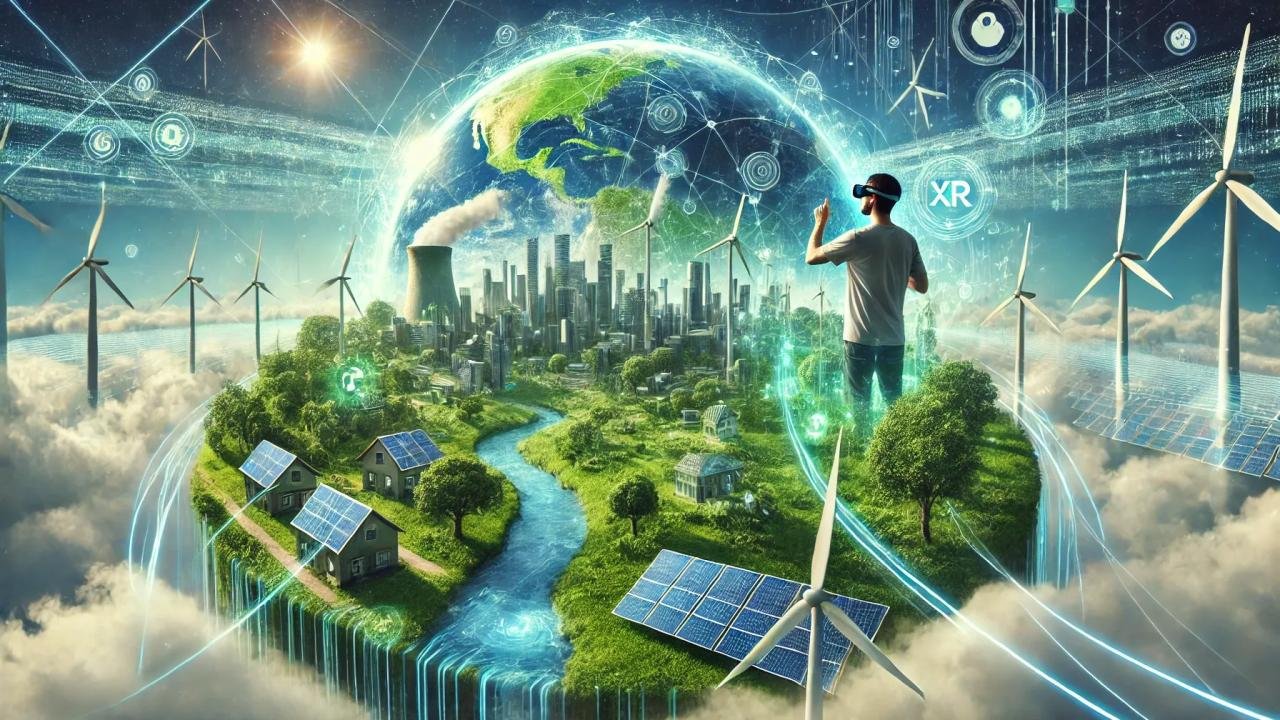
Digital Twins for a Greener Planet: Simulating Sustainability at Scale
As organizations strive to achieve ambitious environmental goals, one challenge continues to stand out: making informed decisions before investing in real-world changes. Whether improving energy efficiency, reducing emissions, or optimising resource utilization, trial-and-error approaches can be expensive and time-consuming. This is where Digital Twin technology is emerging as a transformative solution. By creating dynamic virtual replicas of physical assets, systems, and environments, digital twins enable organizations to simulate, predict, and optimise sustainability outcomes before implementing them in the real world.
A digital twin is far more than a three-dimensional model. It is a living digital representation that continuously receives data from sensors, connected devices, and operational systems. Combined with artificial intelligence, machine learning, and real-time analytics, digital twins mirror the behaviour of physical systems, allowing organizations to evaluate different scenarios with remarkable accuracy.
One of the most impactful applications of digital twins is energy optimization. Buildings, manufacturing facilities, and data centers consume enormous amounts of electricity every day. Digital twins help engineers identify energy inefficiencies, test operational improvements, and optimise equipment performance without disrupting ongoing operations. Even small efficiency improvements can produce significant environmental benefits when applied across large infrastructures.
Smart cities are also embracing digital twin technology to improve sustainability. Urban planners can simulate traffic patterns, public transportation systems, water distribution networks, and energy consumption to reduce congestion, lower emissions, and improve resource management. Instead of reacting to problems after they occur, city administrators can evaluate alternative strategies through virtual simulations before making policy or infrastructure decisions.
Technology companies such as Microsoft, Siemens, and NVIDIA are investing heavily in digital twin platforms that combine cloud computing, artificial intelligence, and high-performance simulation. These solutions enable organizations to build intelligent models capable of supporting sustainability initiatives across industries ranging from manufacturing and healthcare to logistics and urban development.
The manufacturing sector is another area where digital twins are delivering measurable value. Production lines can be monitored continuously to minimise waste, optimise raw material usage, and reduce equipment downtime through predictive maintenance. By identifying potential failures before they occur, organizations extend asset lifecycles while reducing unnecessary resource consumption.
Supply chains also benefit from simulation-driven decision-making. Digital twins provide end-to-end visibility across logistics networks, enabling businesses to optimise transportation routes, reduce fuel consumption, improve inventory management, and evaluate the environmental impact of sourcing decisions. These insights help organizations build more resilient and sustainable supply chains.
Artificial intelligence further enhances digital twins by enabling predictive analytics. Rather than simply displaying current conditions, AI can forecast future performance, estimate carbon emissions, and recommend actions that improve both operational efficiency and environmental outcomes.
Despite these advantages, implementing digital twins requires careful planning. Organizations must integrate high-quality data from multiple systems, establish robust cybersecurity measures, and maintain accurate models that evolve alongside physical assets. Successful adoption depends on strong governance, cross-functional collaboration, and continuous investment in data quality.
Looking ahead, digital twins are expected to play a central role in addressing climate challenges. As governments and businesses pursue net-zero objectives, simulation technologies will help evaluate renewable energy projects, optimise carbon reduction strategies, and improve climate resilience across critical infrastructure.
In conclusion, digital twins are transforming sustainability from a reactive process into a predictive and data-driven discipline. By enabling organizations to simulate environmental outcomes before taking action, they reduce uncertainty, improve decision-making, and accelerate progress toward a more sustainable future. As intelligent technologies continue to evolve, digital twins will become an indispensable tool for building a greener, smarter, and more resilient planet.
#DigitalTwins #Sustainability #ArtificialIntelligence #ClimateTechnology
#GreenTech #SmartCities #DigitalTransformation #PredictiveAnalytics
#NetZero #FutureTech #EnvironmentalInnovation #DrAkhileshKumar
Author
Dr. Akhilesh Kumar
References
- Microsoft. Research on Azure Digital Twins and Sustainable Infrastructure Solutions.
- Siemens. Digital Twin Technologies for Industrial Sustainability and Smart Manufacturing.
- NVIDIA. Omniverse Platform and AI-Powered Digital Twin Innovation.
- World Economic Forum. Digital Transformation and Climate Action Reports.
- International Energy Agency (IEA). Digital Technologies for Sustainable Energy Systems.
Comments (0)
No comments yet. Be the first to share your thoughts!
Leave a Comment