
Data Lakes: Unlocking Scalable Data Storage and Advanced Analytics
In today’s data-driven world, organisations generate vast amounts of structured, semi-structured, and unstructured data from multiple sources. Managing and extracting value from this diverse data has led to the rise of data lakes, scalable storage systems designed to handle large volumes of raw data in its native format. Unlike traditional data warehouses that require predefined schemas, data lakes allow organisations to store data without immediate transformation, offering greater flexibility and efficiency.
A data lake is a centralised repository that ingests and stores data from various sources, such as applications, sensors, social media, and transaction systems. This approach enables organisations to preserve detailed data for future analysis, making it particularly valuable for advanced analytics, machine learning, and artificial intelligence applications.
One of the key advantages of data lakes is scalability. Built on cloud-based infrastructure, data lakes can expand dynamically to accommodate growing data volumes. This eliminates the limitations of traditional storage systems and supports real-time data processing and analysis. Additionally, data lakes enable organisations to perform exploratory analytics, allowing data scientists and analysts to uncover patterns and insights that may not be visible in structured datasets.
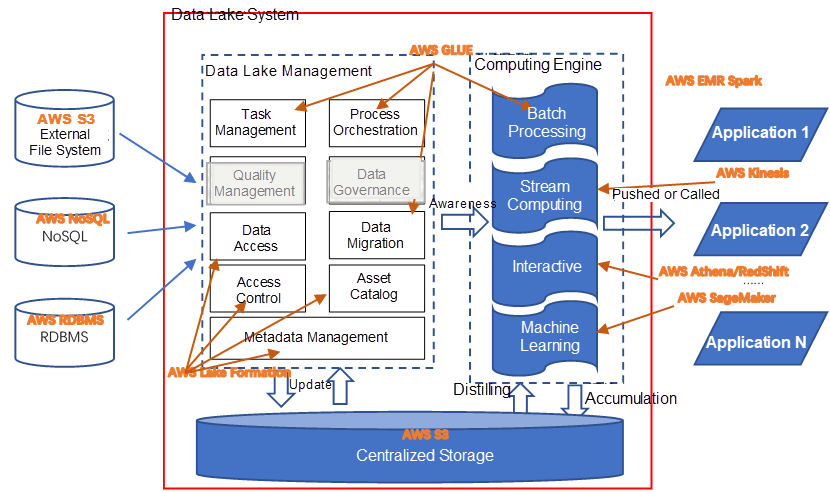
However, managing data lakes effectively requires proper governance and organisation. Without clear data management practices, data lakes can become “data swamps,” where information is difficult to locate, interpret, or use. Implementing metadata management, data cataloguing, and access control is essential to maintain data quality and usability.
Security is another critical consideration. Organisations must ensure that sensitive data stored in data lakes is protected through encryption, authentication, and compliance with regulatory standards.
Overall, data lakes provide a powerful foundation for modern data strategies. By enabling flexible storage and advanced analytics, they support innovation and informed decision-making across industries.
#DataLakes #BigData #DataAnalytics #CloudComputing #DataScience
#DigitalTransformation #AI #MachineLearning #DataManagement
#TechInnovation #DataEngineering #Analytics
Author
Dr. Akhilesh Kumar
References
- Amazon Web Services. Data Lake Architecture and Cloud Data Management.
- Microsoft Azure. Data Lake Solutions and Analytics Services.
- Gartner. Big Data and Data Lake Strategy Insights.
Comments (0)
No comments yet. Be the first to share your thoughts!
Leave a Comment