
Brain-Computer Interfaces Go Mainstream: From Paralysis Treatment to Everyday Tools
The relationship between humans and computers is entering a remarkable new chapter. For decades, keyboards, mice, touchscreens, and voice assistants have served as the primary ways we interact with digital systems. Today, advances in neuroscience, artificial intelligence, and biomedical engineering are paving the way for Brain-Computer Interfaces (BCIs) - technologies that enable direct communication between the human brain and external devices. Once considered experimental, BCIs are steadily progressing toward practical applications that extend beyond clinical care into education, productivity, communication, and everyday life.
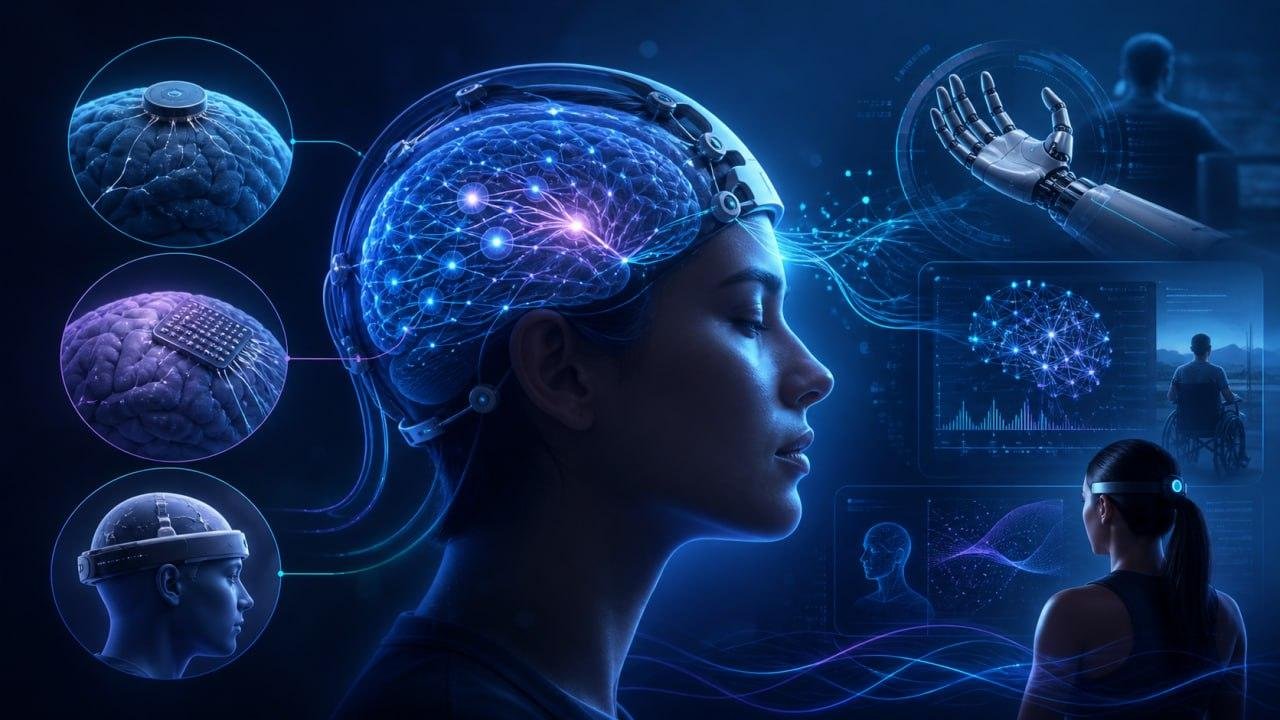
A Brain - Computer Interface captures neural activity, interprets brain signals using sophisticated algorithms, and translates those signals into commands that computers or connected devices can understand. Depending on the application, these systems may be invasive, involving implanted electrodes, or non-invasive, using wearable sensors placed on the scalp. Artificial intelligence plays a central role by identifying complex neural patterns and improving decoding accuracy over time.
Healthcare remains the most transformative application area. For individuals living with paralysis, spinal cord injuries, or certain neurological disorders, BCIs have demonstrated the potential to restore communication and interaction with the surrounding world. By interpreting neural signals, these systems can allow users to control computers, robotic limbs, or assistive technologies using thought alone. Such advances represent a significant step toward improving independence and quality of life.
Research organizations and technology companies, including Neuralink and Synchron, continue to advance brain-computer interface technologies through clinical research, engineering innovation, and human trials. Their work is contributing to a deeper understanding of how neural interfaces may safely support medical and assistive applications.
Beyond healthcare, BCIs are beginning to attract attention as future productivity tools. Imagine professionals navigating complex software, controlling smart environments, or interacting with augmented reality systems using subtle neural commands. Although these possibilities remain under active development, ongoing improvements in signal processing, wearable sensors, and AI are steadily expanding what may become feasible over the coming years.
Education is another promising field. Adaptive learning platforms integrated with non-invasive BCIs could one day provide insights into cognitive engagement, helping educators personalize instruction while supporting learners with diverse needs. Similarly, industrial applications may use neural interfaces to enhance operator safety, reduce cognitive overload, and improve human-machine collaboration in high-risk environments.
Artificial intelligence is accelerating this progress by improving the interpretation of neural data. Modern machine learning models can distinguish increasingly subtle patterns within brain activity, enabling more reliable and responsive interaction between users and digital systems. As algorithms continue to evolve, brain-computer interfaces are expected to become more accurate, accessible, and user-friendly.
However, the widespread adoption of BCIs raises important ethical and societal questions. Brain signals represent deeply personal information, making privacy, informed consent, and data protection essential considerations. Organizations developing neural technologies must establish robust safeguards to ensure that neural data is collected, processed, and stored responsibly.
Accessibility and affordability also remain important challenges. Advanced neural technologies should be developed in ways that benefit broad populations rather than becoming available only to a limited number of users. Continued collaboration among researchers, healthcare providers, policymakers, and technology developers will be essential to promote equitable access.
The future of BCIs is likely to evolve gradually rather than through sudden transformation. Medical rehabilitation, assistive technologies, and specialised professional applications are expected to lead adoption, while consumer use cases will depend on continued advances in safety, comfort, accuracy, and regulation.
In conclusion, brain-computer interfaces represent one of the most exciting frontiers in human-centred technology. By enabling more natural communication between people and machines, BCIs have the potential to transform healthcare, improve accessibility, and reshape how humans interact with digital systems. As neuroscience and artificial intelligence continue to converge, the boundary between thought and technology may become one of the defining innovations of the coming decades.
#BrainComputerInterface #BCI #Neurotechnology #ArtificialIntelligence
#HealthcareInnovation #MedicalTechnology #FutureTech #DigitalHealth
#HumanMachineInteraction #AssistiveTechnology #Innovation
#DrAkhileshKumar
Author
Dr. Akhilesh Kumar
References
- Neuralink. Research on Implantable Brain-Computer Interface Technologies.
- Synchron. Development of Endovascular Brain-Computer Interface Systems.
- Institute of Electrical and Electronics Engineers. Research on Brain-Computer Interfaces and Neurotechnology.
- National Institutes of Health. Studies on Neuroengineering, Neural Rehabilitation, and Assistive Technologies.
- World Health Organization. Guidance on Assistive Technology and Digital Health Innovation.
Comments (0)
No comments yet. Be the first to share your thoughts!
Leave a Comment